
Formula 1’s 2026 season doesn’t just mark a new year — it marks the beginning of a genuine new era. With the most sweeping regulatory overhaul in the sport’s modern history, two brand-new teams on the grid, and a geopolitical cloud hanging over the April calendar, the Australian Grand Prix at Albert Park this weekend (March 6–8) is the starting gun on what could be the most unpredictable season in years. Here’s everything you need to know.
This Isn’t Just Another Season Reset
The scale of change heading into 2026 cannot be overstated. The cars are smaller and lighter. The power units are redesigned from the ground up. DRS — the overtaking aid that has defined the sport’s passing mechanics for over a decade — has effectively been replaced by active aerodynamics. And two new constructors, Audi and Cadillac, join the grid for the first time, taking the field to 22 drivers across 11 teams.
After two rounds of official pre-season testing in Bahrain (February 11–13 and 18–20), a clearer picture has emerged — though far from a settled one. A front group of four has formed: Mercedes and Ferrari appear to hold a slight edge on balance, with McLaren and Red Bull close enough to keep the true order genuinely uncertain heading into Melbourne. Further back, Aston Martin’s winter has been defined by Honda-linked reliability issues that left them dramatically short on mileage compared to the rest of the field.
Off-track, escalating conflict in the Gulf has put April’s Bahrain and Saudi Arabia rounds under scrutiny, with the FIA publicly stating that safety will guide any calendar decisions. It is a season promising drama long before the chequered flag.
Three Rule Changes That Will Actually Change What You Watch
If you take nothing else from this preview, understand these three things.
First, active aerodynamics replaces DRS as we knew it. Rather than a driver pressing a button to open a rear wing flap on the straight, cars now switch between dedicated straight-line and cornering aero modes, with a redesigned overtaking system built into the car’s architecture from the ground up. It is a fundamentally different concept.
Second, drivers now have two distinct electrical deployment tools: “Overtake Mode,” which activates when within one second of a rival, and “Boost,” which can be used tactically at any point on track. Alongside these, the concepts of energy harvesting, recharging, and so-called “super clipping” mean that energy management is no longer a background skill — it is now one of the primary performance differentiators between teams and drivers.
Third, race starts will look different. The removal of the MGU-H from the power unit reintroduces turbo-lag at launch, something the sport hasn’t had to manage for years. F1 has tweaked the start procedure accordingly, with a new pre-start warning system trialled in Bahrain and expected to continue at Albert Park. The opening corners of the early races could be notably more chaotic as a result.
The Driver Storylines to Follow
Lando Norris arrives in Melbourne as the reigning world champion, having secured the 2025 title in Abu Dhabi. McLaren also hold the Constructors’ Championship. Defending both titles in a brand-new technical era — where every team starts from scratch — is one of the most fascinating subplots of the year.
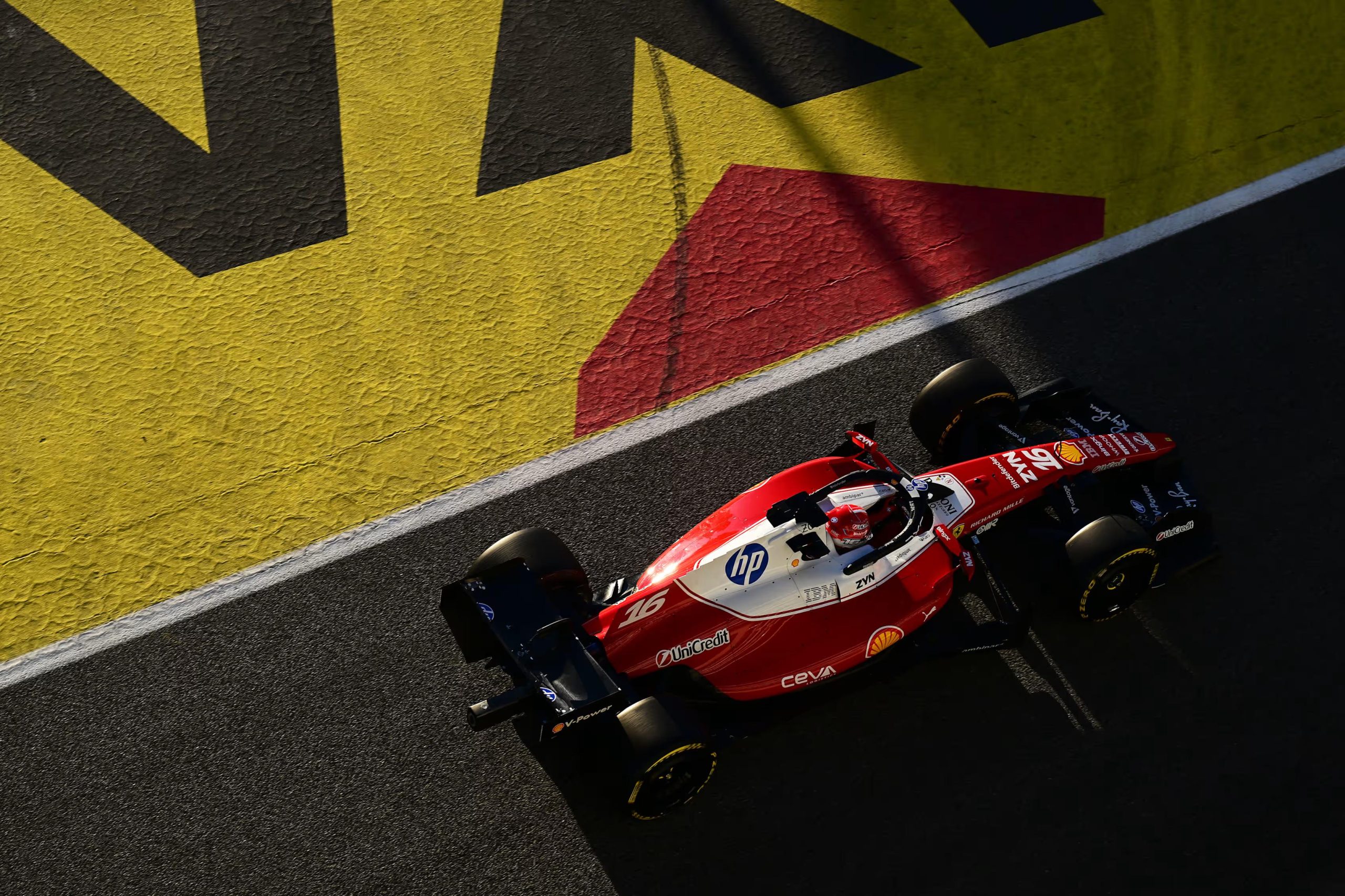
At Ferrari, the star-studded pairing of Lewis Hamilton and Charles Leclerc continues into 2026. The SF-26 drew significant attention during Bahrain testing for its ambitious aerodynamic concepts, and Ferrari led on outright pace in the second test week. Whether that translates directly to race pace in Melbourne remains to be seen, but the signs are encouraging.
Max Verstappen has a new teammate. Isack Hadjar has been promoted to the senior Red Bull seat, with rookie Arvid Lindblad stepping up to Racing Bulls. Yuki Tsunoda, meanwhile, has been moved into a reserve role within the Red Bull structure — a reshuffle that raised eyebrows across the paddock and leaves Verstappen adapting to a new dynamic at the same time as managing an entirely new car concept.
The two new teams each bring compelling storylines. Cadillac arrive as the 11th constructor, fielding the eye-catching pairing of Sergio Perez and Valtteri Bottas — two veterans with significant points still to prove. Audi, meanwhile, have formally launched as the Audi Revolut F1 Team, with Revolut confirmed as title partner, and the Qatar Investment Authority holding a minority stake in the broader Sauber holding structure that underpins the project.
Red Bull’s Engine Gamble
One of the defining strategic decisions of the 2026 era belongs to Red Bull. The team debuts their own in-house power unit this season, making them a manufacturer in their own right and supplying their sister team Racing Bulls. It is one of the most significant bets in recent Formula 1 history. Early testing suggested the unit is performing better than many feared, but whether it can match Mercedes and Ferrari across a full race weekend is the central question hanging over Verstappen’s title hopes.
Alpine, by contrast, have moved in the opposite direction — switching to Mercedes power after Renault’s long run as an engine manufacturer in F1 comes to an end.
Where Every Team Stands After Testing
Mercedes led the field in total pre-season mileage and are repeatedly identified by analysts as the team to beat heading into the new season, despite a late power unit issue in the final test days. Ferrari posted the fastest single lap of Bahrain Test 2 and arrive in Melbourne in what their team describes as “good shape.” Both are genuine win contenders from race one.
McLaren sit in the top four but their team principal has acknowledged that Mercedes and Ferrari looked slightly ahead on balance. Red Bull are also in that group, though their position comes with more uncertainty given the new in-house power unit and lower total mileage compared to the top two.
Haas emerge as the midfield team to watch — they recorded the second-highest combined pre-season kilometres behind Mercedes and were widely noted as among the most impressive runners outside the top four. Alpine and Audi sit in the broader midfield cluster, with Racing Bulls also showing solid pace and reportedly targeting specific upgrades for Australia.
Williams missed the Barcelona shakedown test and arrive at Albert Park with less mileage than most. Cadillac, as a brand-new entrant, are expected to be towards the back initially but have accumulated laps steadily and may avoid last place if Aston Martin’s problems persist.
Aston Martin are the clear outlier of the winter. Honda issued a public statement confirming battery-related issues, and multiple reports documented compounding reliability interruptions throughout both test weeks. Their mileage total was dramatically lower than any other team’s, and the risk of a difficult start to the season is significant.
The Calendar Risk Nobody Saw Coming
Away from the technical storylines, the most urgent developing story is one Formula 1 had not planned for. Escalating conflict in the Gulf, including missile and drone attacks affecting multiple states, has caused airspace disruption and triggered contingency planning across international sport.
The FIA has publicly stated that safety and wellbeing will guide decisions on April’s Bahrain and Saudi Arabia rounds. WEC has already postponed its Qatar season opener citing the same regional escalation. Pirelli cancelled a planned Bahrain tyre development test for security reasons. None of this equals a cancellation of the F1 races — but it places both events in a state of active monitoring at the time of writing.
For the Melbourne weekend itself, the Australian Grand Prix Corporation CEO has confirmed no impact on the race’s delivery, even with some travel re-routing required. The immediate calendar is secure. April is a different conversation.
Our Melbourne Prediction
Based on testing evidence, we see Mercedes and Ferrari fighting for the top positions in Australia, with McLaren and Red Bull closely involved. Hamilton’s experience at Albert Park and Ferrari’s standout single-lap pace make them our narrow selection for the race win — but this is the most uncertain opener in recent memory, and the testing data carries more caveats than usual given the entirely new regulations.
The one outcome we’re most confident about: this will not be a processional race. New energy deployment rules, new start dynamics, and 22 drivers adapting to fundamentally different cars in real time is a recipe for unpredictability. Buckle in.
Leave a Reply